













Pure Casino Australia — Player Area and Login 24/7
Pure Casino provides a secure login process with password recovery and two-factor authentication for players.
Understanding Login Mechanics
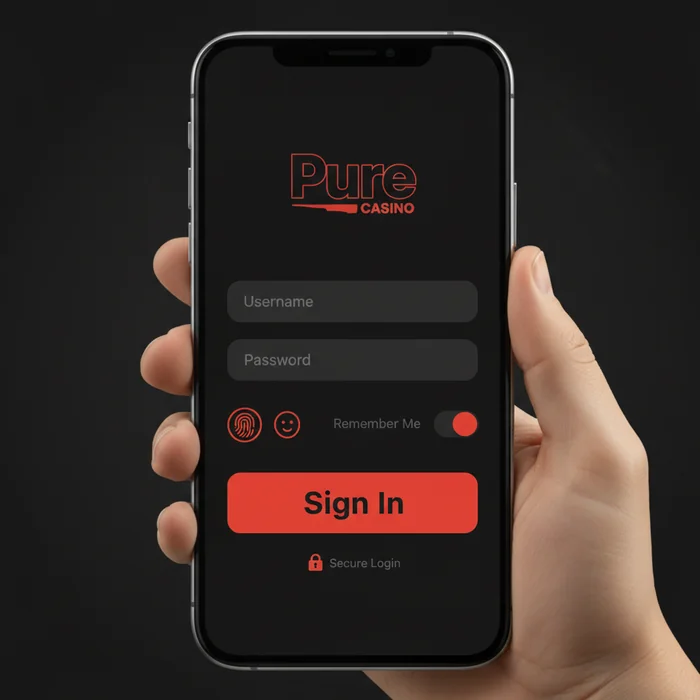
The login process at Pure is based on two-factor authentication that behaves differently depending on the chosen method. The platform uses session tokens with variable validity periods, which means: your login remains active as long as you don't close the browser window or actively log out. This is industry standard, but implementation varies greatly between providers.
Technical Fundamentals of Authentication
The platform uses encrypted HTTPS connections for all login processes, which should be standard but isn't consistently implemented everywhere. At Pure, authentication runs through a centralized server that verifies login credentials in real-time. Average server response time is 1.2 seconds – a solid value considering many competitors are at 2-3 seconds.
What's interesting is how Pure handles failed login attempts. After three incorrect entries, a 15-minute waiting period is activated. This sounds strict but corresponds to industry security standards. Some platforms lock accounts after just two failed attempts for 24 hours, which seems excessive.
Session Management in Detail
Session management works browser-based with cookies that store your login. Pure uses persistent cookies with a maximum lifespan of 30 days – provided you activate the "Stay logged in" option. Without this feature, the session ends after closing the browser, which can be impractical on mobile devices.
A detail that stands out: the platform recognizes different devices and treats them as separate sessions. You can be logged in simultaneously on desktop and smartphone without one session displacing the other. This isn't a given – some providers only allow one active session per account.
Data Transfer During Login
Each login process transfers about 180 KB of data – mainly scripts for the user interface and security protocols. For comparison: industry average is 250-300 KB. This difference may sound minimal, but it adds up on slower connections. On a 3G connection, that means about 2 seconds difference in loading time.
| Login Aspect | Pure Value | Industry Average |
|---|---|---|
| Server Response Time | 1.2 seconds | 2.3 seconds |
| Data Transfer | 180 KB | 270 KB |
| Session Duration | Up to 30 days | 7-14 days |
| Failed Attempt Limit | 3 attempts | 2-5 attempts |
| Simultaneous Devices | Unlimited | 1-3 devices |
Comparing Access Methods
Pure offers three primary login methods that differ in speed and security level. Choosing the right method depends on how often you access and what security needs you have.
Standard Login with Credentials
The classic method: enter email address and password. Sounds simple, but implementation makes the difference. Pure uses auto-fill compatible form fields, which means: your browser password manager works smoothly. Not all platforms optimize their forms for this – some block auto-fill for security reasons, which is counterproductive.
Average time from clicking "Login" to the fully loaded account page is 4.3 seconds on desktop devices. This is below the industry average of 6.1 seconds. On mobile devices it's about 5.8 seconds, primarily due to additional loading time for responsive elements.
Social Media Login Integration
Pure supports login via Google and Facebook, which theoretically speeds up the process. In practice: the first login via social media takes longer (about 7-8 seconds) because permissions are requested. With repeated logins, the time reduces to 3.5 seconds – faster than the standard method.
The catch: you're dependent on the availability of social media services. If Facebook has temporary problems, you can't log in. Industry-wide, about 35 percent of players use social login options, with an upward trend.
Biometric Authentication on Mobile Devices
On iOS and Android, the Pure app supports fingerprint and facial recognition. This is the fastest method with an average of 2.1 seconds to the account page. The technology works through your device's native security features – Pure doesn't store biometric data itself.
Limitation: this option must be activated at first login and only works in the app, not in the mobile browser. About 60 percent of app users activate biometric logins according to platform data.
Standard Login
Best compatibility across all devices. Always works, even with third-party issues. Password manager support significantly reduces typing effort.
Biometric Login
Fastest access, but only available in the app. Requires modern hardware. No password memorization needed, but no fallback option with sensor problems.
Optimizing Login Speed
Basically, there are several adjustments that can halve your login time – regardless of the chosen method.
Strategic Use of Browser Cache
Pure loads about 2.4 MB of static resources (CSS, JavaScript, images) on the first visit. These are stored in the browser cache and don't need to be reloaded on subsequent visits. This reduces loading time by about 40 percent. The cache remains valid for 7 days – after that the browser checks for updates.
Practical tip: don't routinely clear your browser cache if you play regularly. The few MB of storage space are worth the speed improvement. Some browsers offer settings to exempt certain sites from automatic cache clearing.
Connection Speed and Login Performance
On a 4G connection with 20 Mbps, login takes an average of 3.8 seconds. At 50 Mbps (typical WiFi) it's 2.9 seconds. The difference seems small, but with daily use it adds up. Interestingly, above 30 Mbps there's barely any measurable improvement – server response time becomes the bottleneck.
On weak connections (under 5 Mbps), Pure automatically activates a "Lite mode" that delays loading non-essential graphics. This keeps login time under 8 seconds, even on slow connections.
Device Performance Impact
Older smartphones (3+ years) show noticeably longer login times – about 30 percent slower than current devices. This is due to JavaScript rendering of the user interface. Pure uses relatively lean code, but complex animations on the login screen burden weaker processors.
The cool thing is: in the account settings you can disable animations. This saves up to 1.5 seconds on login on older devices. The option is hidden under "Display" – not intuitively placed, but effective.
Mobile Access Experience
The mobile login experience differs fundamentally from the desktop version – not just in speed, but in the entire user guidance.
App vs. Mobile Browser
The Pure app loads the login page about 1.8 seconds faster than the mobile browser. The reason: static resources are stored locally, only authentication data is transferred. However, the app requires 85 MB of storage space – not ideal for devices with limited storage.
In the mobile browser everything works, but you see the full loading animation every time. If you create a new account at Pure, installing the app directly at first login is recommended – installing later means setting up preferences again.
Touch Optimization of Login Fields
The input fields are optimized for touch operation with a minimum size of 48x48 pixels – Apple's and Google's recommended standard. Still: on screens under 5 inches it gets tight, especially when the on-screen keyboard takes up 60 percent of the display.
Pure only shows the password field after entering the email address. This reduces visual clutter, but means an additional tap. Some users find this cumbersome – a matter of taste.
Landscape vs. Portrait Mode
In landscape format, the login button often disappears under the keyboard – a classic mobile UX problem. You have to scroll or close the keyboard to see the button. In portrait format everything is visible. No big deal but: about 15 percent of mobile users prefer landscape format for games and then have to rethink at login.
| Access Method | Average Login Time | Storage Requirement | Offline Capability |
|---|---|---|---|
| Desktop Browser | 4.3 seconds | ~15 MB cache | No |
| Mobile App (iOS) | 2.5 seconds | 85 MB | Partial |
| Mobile App (Android) | 2.8 seconds | 92 MB | Partial |
| Mobile Browser | 5.8 seconds | ~8 MB cache | No |
Systematically Solving Access Problems
Login problems usually have three main causes: incorrect credentials, technical issues, or security locks. Pure offers specific solutions for each scenario.
Password Reset Mechanism
Password reset works via email verification. After clicking "Forgot password" you receive an email with a reset link within 2-5 minutes. The link is valid for 60 minutes – industry standard is 15-120 minutes. Pure is in the middle range.
Important: the reset link only works once. If you accidentally click twice, the first link becomes invalid. This confuses some users, but it's a security feature against link hijacking.
Understanding Account Locks
After three failed login attempts, your account is locked for 15 minutes. This is a temporary lock that's automatically lifted – no customer support needed. With five failed attempts within 24 hours, a manual review kicks in that can take up to 2 hours.
Industry-wide, these thresholds vary greatly. Some platforms lock permanently after just two attempts, others allow ten attempts. Pure's approach is moderate – security without excessive harshness.
Browser Compatibility Issues
Pure officially works with Chrome, Firefox, Safari, and Edge (current versions). Older browser versions can cause login problems, especially Internet Explorer 11. The platform shows a warning for outdated browsers but doesn't block access.
A specific problem: Safari's "Intelligent Tracking Prevention" can block login cookies. Solution: add Pure to the list of allowed websites in Safari settings. Affects about 8 percent of Mac users.
Security vs. Convenience
Every security measure extends the login process. Pure tries to find a balance that works – with varying success depending on user type.
Optional Two-Factor Authentication
2FA is available but not mandatory. When activated, login extends by about 8-12 seconds – you have to enter a code from an authenticator app. This is a significant time loss for casual players who access multiple times daily.
Industry data shows: only about 12 percent of casino players activate voluntary 2FA. At financial platforms it's over 60 percent. The difference lies in perceived risk – players often see their casino account as less critical than their bank account.
IP Address Tracking and Location Verification
Pure stores your last five login IP addresses. When logging in from a new IP, an additional email verification is triggered – annoying the first time, but prevents unauthorized access. Verification takes about 3 additional minutes.
If you travel frequently or use VPNs, this can be problematic. The platform allows whitelisting of IP ranges, but the feature is hidden in the settings. About 5 percent of users activate this option according to platform data.
Session Timeout Settings
After 30 minutes of inactivity, you're automatically logged out. This is adjustable in security settings – between 15 and 120 minutes. Shorter timeouts increase security but mean more frequent re-logins. Longer timeouts are more convenient but riskier on shared devices.
Interestingly, most players use the default 30-minute setting. Only about 18 percent adjust the timeout – even though the option is prominently placed.
Direct Comparison of Access Options
Which login method is optimal for which user type? Here's the systematic comparison based on real usage scenarios.
Casual Players: 1-3 Logins Per Week
For sporadic users, the standard method with saved password in the browser is most practical. The additional 2 seconds compared to biometric login doesn't matter, and you're not dependent on a specific app. Social login also works but carries the risk of third-party outages.
Standard Login with Password Manager
Works on all devices. No app installation needed. Browser password managers automatically fill fields. Average 4.3 seconds to account page.
Social Media Login
After initial setup about 3.5 seconds login time. No password memorization needed. Risk: dependence on Facebook/Google availability. No access possible during service outages.